This newsletter is designed to give you researched backed skills to improve your mental, emotional and relational lives.
What Three Years Inside a Big 12 Athletic Program Taught Me About Mental Health
|
"In athletics, outcomes matter. That is the reality of competition. But identity doesn't have to track performance like a stock price going up and down. That distinction, between what you do and who you are, is where the real work lives." Hey All, Today I’m speaking at the Kansas Health and Science University Sports Medicine Conference about the several years I spent working as a therapist inside a Big 12 athletic program. This was a big moment in my career because it showed me how much I misunderstood my job. In my first year working with Kansas State Athletics. Big 12 football champions. Sweet Sixteen basketball run. The kind of program that produces professional athletes and national headlines. It was fun. I showed up with my books. The best resources. Visualization protocols. Mental performance frameworks. I had done my homework. I thought I knew what these athletes needed. I was wrong. About two weeks in, I sat down with one of the players on the team. Physically gifted. Coachable. Never missed a rep. And he looked exhausted. I asked him how things were going off the field. Long pause. He told me he’d been sending most of his food stipend home every month (this was pre-NIL). His mom was behind on the electric bill. He hadn’t told anyone - not his coaches, teammates, or the athletic staff. I didn’t have a protocol for that moment. I didn’t say anything particularly wise. I just listened. And somewhere in that conversation I realized that everything I had prepared to offer this man was not even close to what he actually needed. He didn’t need a visualization exercise. He needed someone to ask the right question and then stay quiet long enough to hear the answer. I put the mental performance books down after that and started paying attention differently. Now I spend most of my time in a private practice setting - working with men, running a counseling center, teaching. The athletes I sat with look a lot different on the outside, but what I learned inside that program transfers almost perfectly. That’s what I want to share with you today - and why I think it matters for the athletes and people in your care.
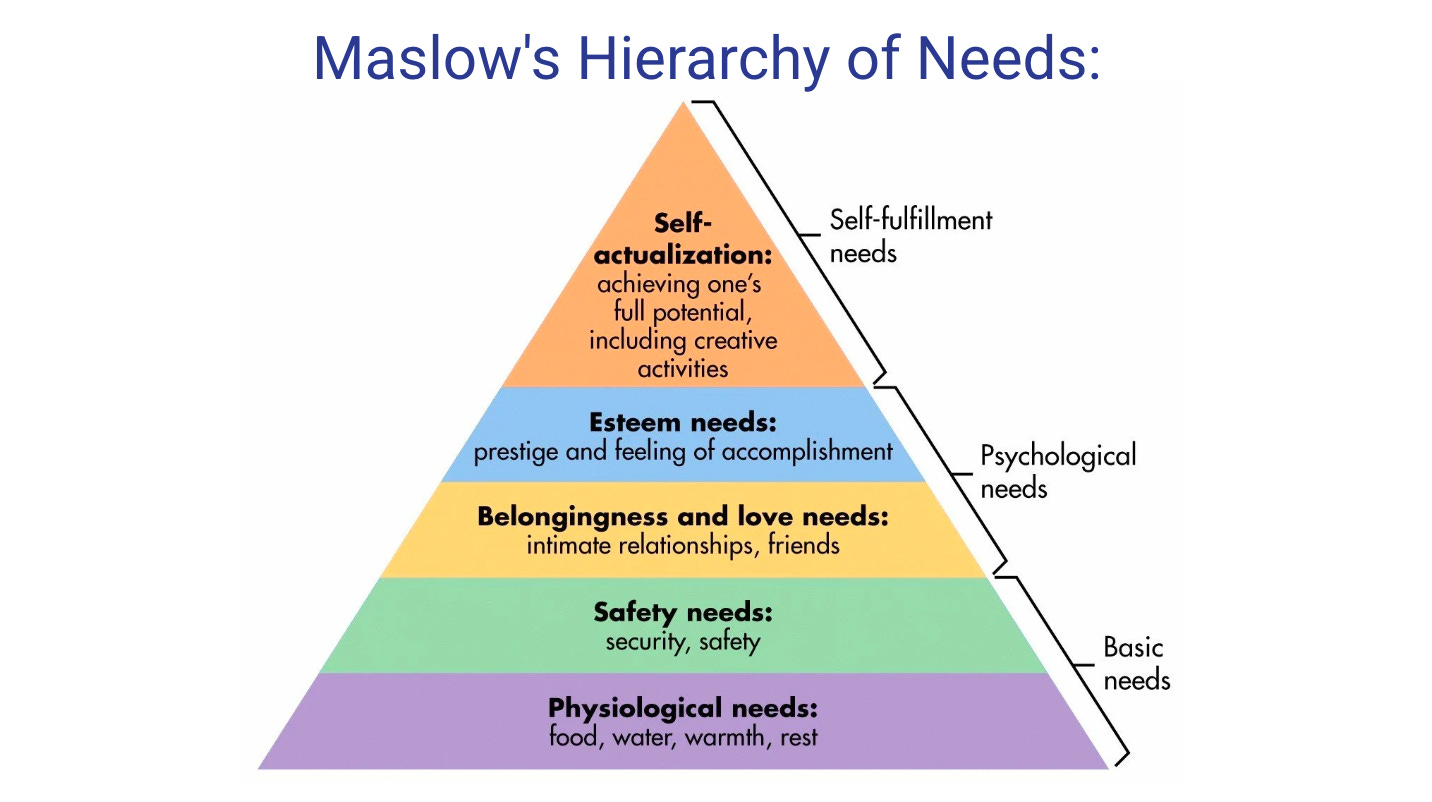
The Framework I shifted to:After a couple of years, I stopped reaching for the sports psychology books and went back to something much more foundational. Something I had learned in graduate school but hadn’t touched in a while. Maslow’s Hierarchy of Needs: Most people have seen the pyramid in a class somewhere and moved on. I had too. But I started to see it everywhere inside that athletic program — in the stories athletes were telling me, in the places where interventions weren’t working, in the gap between what was presenting and what was actually going on. The core principle is simple: unmet needs at any level will cap your capacity at every level above it. Think of it like a check engine light. The car still runs. The athlete still performs. But something is wrong under the hood. And no amount of mental performance coaching fixes a check engine light. You have to open the hood first. Here is what each level looked like from where I was sitting.
Level 1: The Basics — Sleep, Food, RestI’ll be honest — I didn’t think much about this level when I started. These were elite college athletes. Surely the basics were covered, right? They weren’t. Sleep disturbances affect approximately 25% of athletes and directly impair both performance and mental health. Early morning lifts, late film sessions, travel, academic demands. What I learned slowly was that no mental performance intervention works reliably on a depleted nervous system. Therapy doesn’t work well on an empty stomach. This level has to be assessed first. I didn’t always do that in year one. I do now. Level 2: Safety — Stability, Predictability, SecurityOur brains are wired for survival above everything else. When the threat system fires, it takes over. That is exactly what it is supposed to do. And it makes genuine peak performance functionally impossible until the threat — real or perceived — is no longer active. I worked with an athlete who received a call hat her apartment had been flooded by a bullet that came through the ceiling during a shooting below. She was expected on the bus in two hours. I want to be clear that I did not have a clean answer for that morning. There was no protocol that covered it. What I tried to do, imperfectly, was help her nervous system understand she was no longer in immediate danger. That took time and presence, not technique. Safety needs, when unmet, are not something athletes push through because the game is important. The brain does not work that way. Level 3: Belonging — Connection, Relationships, TeamThis is the level that surprised me most. And it is the one I found underneath the presenting problem more often than any other. I worked with an athlete who was restricting food so severely she was fainting at practice. There was already a treatment plan in place, meal photography, weekly weigh-ins. This was the dumbest treatment plan for eating disorders I’ve ever seen in practice. When we had been working together long enough that she trusted me with the real story, she told me that a year earlier she had been in a relationship with a teammate. After it ended, she became terrified of losing her spot in the top boat. She concluded that the best way to secure her place was to lose weight. The eating disorder wasn’t about food. It was about belonging. Belonging that felt entirely conditional on her body and her performance. The symptom was the food. The root was belonging. You cannot consistently treat one without addressing the other. Level 4: Esteem — Confidence, Identity, WorthWhen esteem needs go chronically unmet in high-performing environments, what tends to emerge is what researchers now call imposter syndrome. And it is far more common than most people realize. The mechanism underneath it, the thing most content on the topic misses, is this: imposter syndrome is what happens when a person tries to meet their esteem needs entirely through performance. When worth is conditional on outcomes, identity becomes as fragile as the last game, the last evaluation, the last number on the scoreboard. In athletics, outcomes matter. That is the reality of competition. But identity doesn’t have to track performance like a stock price going up and down. That distinction, between what you do and who you are, is where the real work lives. And the research now confirms something I observed clinically long before I could cite it: performance is actually enhanced when esteem needs are met through stable identity and healthy relationships. A secure sense of self doesn’t limit performance. It creates the conditions for it. What This Has to Do With You I’m writing about this in a men’s mental health newsletter and not just leaving it at the sports medicine conference because the pyramid doesn’t stop at the edge of the athletic facility. It applies to every person I sit with in my office. The presenting problem is rarely the root problem. So before you add another habit, another routine, another self-improvement system, take an honest look at which level is actually depleted. Then work there. Stay connected, Zach Clinical Therapist and Founder of Mental Health 4 Men |

Mental Health 4 Men
This newsletter is designed to give you researched backed skills to improve your mental, emotional and relational lives.
I have to brag for a second. The woman who wrote this piece is my wife. She is a physician, a mother of two incredible kids, and somehow the most grounded and loving person I have ever met. We met at Camp Quaker Haven in 2005; literally two kids who had no idea what life had in store. I had no idea I was meeting the woman who would make me a better man & that I would marry. She wrote this because she means every word of it. Read it slowly. She worked hard on it and she deserves your full...

What If Your Mood Problem Is Actually a Protein Problem? "The mind is not a vessel to be filled but a fire to be kindled." — Plutarch Hey all, I was walking through the grocery store last week when I stopped in my tracks in the cereal aisle. Protein Pop-Tarts. I stood there for a moment just taking it in. Picked up the box. Put it back. Kept walking. Then I turned the corner into the chip aisle. Protein Doritos. I am not making this up. We have protein Doritos now. Nacho Cheese flavor. 10...

Without Integrity, What Do We Actually Have? The integrity of the upright guides them, but the unfaithful are destroyed by their duplicity. — Proverbs 11:3 Hey all, We live in a world where integrity is praised loudly and rarely practiced. Integrity shows up in mission statements, slogans, acceptance speeches, and LinkedIn bios. Everybody is seeming to claim it. But watch what happens when it actually costs something. When telling the truth means losing the room. When keeping your word means...