This newsletter is designed to give you researched backed skills to improve your mental, emotional and relational lives.
The Art of Saying No
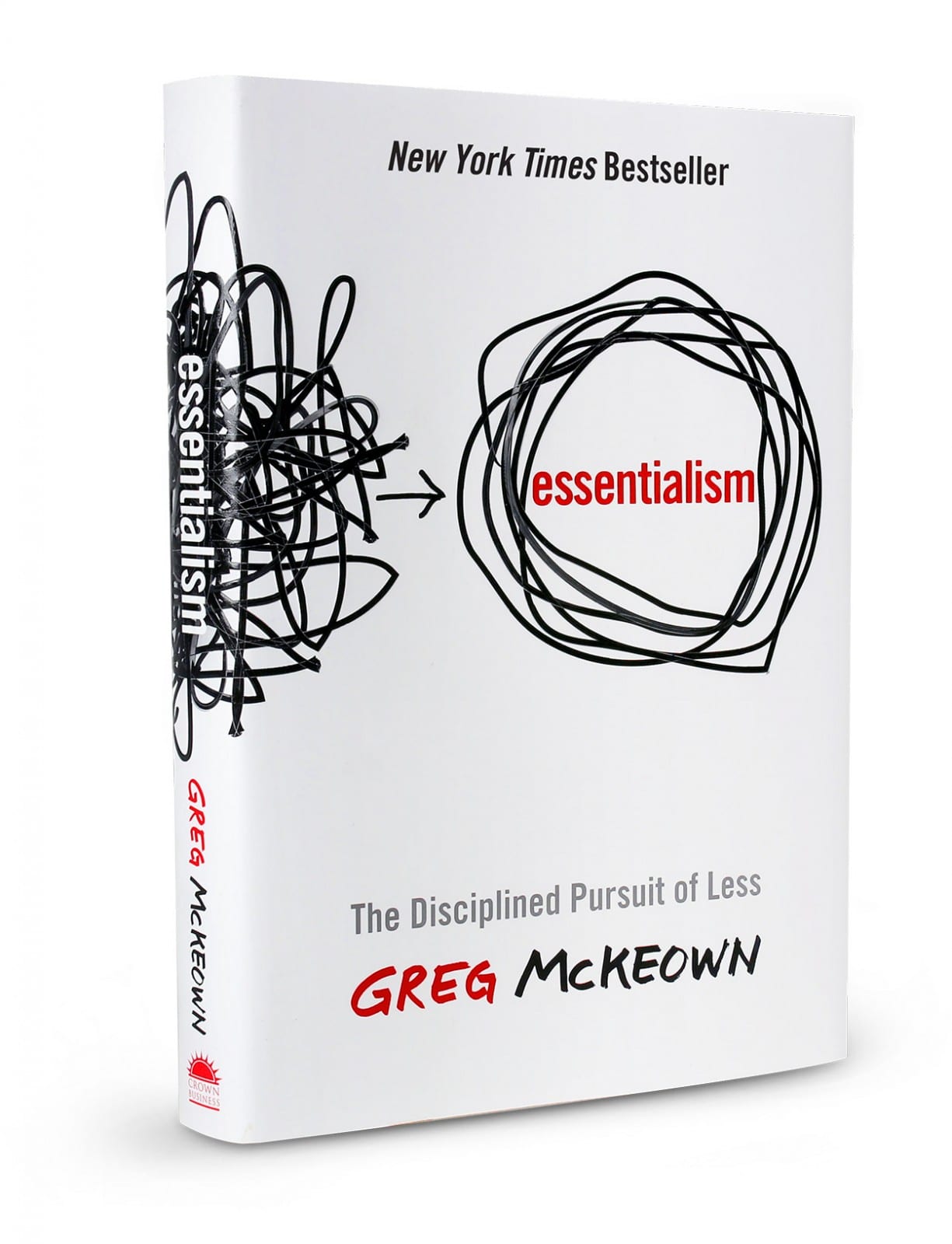
The Art of Saying NoMy two year old daughter has figured something out that most grown adults have not. She has mastered the word no. With zero hesitation and completely unapologetic she can whip that sucker out. I asked her to eat her broccoli tonight. No. I asked her to put on her shoes so we could leave the house. No. I asked her to stop pouring her entire cup of water onto our dog Nala. No. And then she did it again while maintaining eye contact with me! I asked her to not play in the street....no, and ran straight towards the street. The pediatrician tells me this is developmentally appropriate and she's developing agency?? Whatever that means. What I find fascinating is that somewhere between toddler-hood and adulthood, most of us lose this ability.... Essentialism:Greg McKeown wrote a book called Essentialism: The Disciplined Pursuit of Less that covers this topic.
His central argument is: if you do not diligently stay on top of what you say "yes" and "no" to, someone else will. McKeown argues that the word no is not a rejection of a person. It is a defense of your time, your energy, and your priorities. Every yes is implicitly a no to something else. The question is just whether you are making that trade consciously or by default. Most of us are doing it by default. Myself 100% included. Why We Are So Bad at This?Saying no is hard for a lot of adults and seemingly impossible for some. It is hard because of something wired into us socially. Research on social behavior consistently shows that humans are biologically motivated to seek belonging and avoid rejection. Saying no, can activate the same threat response as physical danger because social exclusion historically meant actual survival risk. Your brain treats a potentially awkward conversation the same way it treats a threat to your safety. In other words, when you say yes to something you do not actually want to do, your brain is not being weak. It is trying to keep you safe from social rejection. The problem is that in modern life, that same mechanism keeps you trapped in a schedule full of other people's priorities, commitments and obligations. Most men I work with are not "clinical people pleasers" in the traditional sense. They do not say yes to be liked. They ALSO say yes because they have built their identity around being capable, dependable, and needed. Saying no feels like admitting a limit. And admitting a limit feels like weakness.
So they say yes until they burn out and wonder how they got there.
The Midwestern Nice Problem
For those of us who grew up in the middle of the country (I am writing from Kansas). There is a cultural script in the Midwest that runs deep: Be agreeable. Be Nice. Don't upset the apple cart. Help your neighbor. Show up when you are asked. And whatever you do, do not be rude. Midwestern nice is genuinely one of the things I love about living here. There is a real warmth to it. People show up and show out when you need them to. We are one of the most friendly places in the world! But there is a shadow side to this philosophy. It has quietly convinced a lot of people that saying no is the same thing as being rude. That declining a request is the same thing as rejecting a person.
Friends, this is not "being nice". It's conflict avoidance. A clear no delivered with warmth is always nicer in the long run. The most generous version of you is a rested, boundaried, honest version of you. Not the one who said yes to everything and has nothing left to give. This is not a newsletter about becoming selfish & "living out your best life". That will make you miserable. This is not permission to cancel on your commitments or stop showing up for the people who need you. It is about saying no to the right things so you can bring a more genuine yes to the things that actually matter. Your marriage. Your kids. Your health. Your faith. The work you are actually called by God to do. My two year, underneath the sass, understands something pretty valuable. She knows what she wants. She knows what she does not want. And she is not afraid to say so. There might be something to that. Zach Clinical Therapist and Founder of Mental Health 4 Men "Let what you say be simply yes or no." If you want to get the full library of guides/worksheets upgrade to the paid version!
|

Mental Health 4 Men
This newsletter is designed to give you researched backed skills to improve your mental, emotional and relational lives.
If you want to get the full library of guides/worksheets upgrade to the paid version! Upgrade Membership Hey Friends, It's 2:14 on a Tuesday morning and you're wide awake. Your wife is asleep next to you. The house is quiet, but your brain is busy. Your boss said, "Let's circle back on this next week." That's it. Five words. But you've been chewing on them since dinner. Circle back. That's what you say when you've already made up your mind. Isn't that what they said to the guy down the hall...

If you want to get the full library of guides/worksheets upgrade to the paid version! Upgrade Membership Your Truck Might Get More Maintenance Than Your Marriage See if any of these date night scenarios sound familiar... Date night #1. Husband asks wife if she wants to go out this week. She asks what he has in mind. He says takeout and the new episode of their show. They end up on the same couch, watching two different shows, scrolling on their phones after 15 minutes in. Date night #2. She's...
If you want to get the full library of guides/worksheets upgrade to the paid version! Upgrade Membership What to Do When You Are Running Low on Encouragement Hey all, There is a common cultural script a lot of men absorb somewhere between childhood and adulthood that says needing encouragement is a sign of weakness. That if you are doing the right things for the right reasons you should not need someone to tell you that you are doing okay. This challenged directly the idea that "real men are...