This newsletter is designed to give you researched backed skills to improve your mental, emotional and relational lives.
Treating PTSD 650 Feet Underground on the Fourth of July
|
Hey all, I want to tell you about something that happened right here in Kansas this past Fourth of July that has really impacted me. But first I want to set the scene...
Imagine you are 19 years old and you sign up to serve your country. You do the training. Then you deploy. And for the next eight, twelve, maybe sixteen months, your entire nervous system gets rewired around one singular biological imperative: survive. Loud noises start to become potential threats. Unfamiliar vehicle on the road could be a bomb (i.e. threats). Every darkened doorway, every rooftop, every open field requires threat assessment before you can relax. Your brain, which is extraordinarily good at adapting, starts to change. It improves & gets faster at detecting danger. More ready to fire the alarm at the first signal that something is wrong. This is your brain doing exactly what it was created to do. It is keeping you alive in an environment where staying alive requires that level of vigilance every single day. Then you come home... Your back in the grocery store, the neighborhood barbecue, the family living room. The environment changed completely. The threat detection system that kept you alive on deployment is still running and still scanning. Then the Fourth of July arrives... The country you served celebrates its independence with the one sound your nervous system spent over a year learning to treat as a potential threat. While fireworks are amazing to look at... For a lot of veterans, that night is not a celebration. It is white-knuckling it through eight hours of their own nervous system telling them they are back in a combat zone. My clients that are combat vets have told me they spends most Fourth of Julys in their basement with the TV surround sound turned up as loud as it will go, just trying to drown out the noise.
That is what PTSD looks like in real life for a lot of people. Not a scene from a movie. A man in his basement on a holiday, doing the best he can with a brain that was changed by experiences most of us will never have. This year something new happened I wanted to share with you all! A nonprofit called Passageways, founded right here in Wichita, took veterans from Kansas and neighboring states and brought them 650 feet underground into salt mine in Hutchinson and threw a 4th of July party! The idea started with Jennifer Garrison, the co-founder of Passageways, after Wichita approved larger aerial fireworks in 2024. She was home with her husband when the booms started rattling the windows and walls. She said out loud, almost as a joke, "We might as well just take our veterans underground." Her husband looked at her. She looked at him. And then they actually did it. Down in the mine, 650 feet below the surface there is just silence, a shared meal w/ a room full of people who understand each other without having to explain very much. Check out their news story: What is PTSD/Why PTSD Is So Hard to Treat?I want to explain this as plainly as I can because I think most people misunderstand what PTSD actually is. It is not simply being anxious or stressed after something hard. It is a specific problem with how the brain stores and retrieves memory under extreme threat. And once you understand the mechanism, the image of veterans 650 feet underground starts to make sense. Here is the simplest way to explain it... Think of your brain's memory system like a filing office with two key components: a librarian and a smoke detector. The librarian is your hippocampus. Its job is to take experiences and file them properly, stamping each memory with a time, a place, and a context. The hippocampus is what allows you to remember something hard without feeling like you are reliving it. It gives every memory its proper address in time. The smoke detector is your amygdala. Its job is to detect threat and fire an immediate response. It does not think, it just reacts. When it fires, your body shifts into fight-or-flight flooding your system with cortisol and adrenaline and preparing you to survive. Under normal circumstances these two work together. The smoke detector goes off, the librarian checks the files, provides context, and you respond proportionately. But here is what happens with PTSD. So when a trigger shows up later, a loud boom, a smell, a flash of light, the smoke detector fires the exact same way it fired in the combat zone. The amygdala becomes overactive, responding to perceived threats even when they come from sounds or situations that merely resemble the original danger. The body cannot tell the difference between a mortar round and a firework. Research confirms that PTSD involves a measurable breakdown in communication between the amygdala and the hippocampus, meaning the brain's threat detector and its contextual memory system stop working together the way they should. That breakdown is why treatment takes so long and is so hard. You cannot tell someone with PTSD to think rationally in the middle of a trigger. What the brain actually needs is safety, context, and time. It needs the librarian to slowly and carefully re-file the memory with the right context. That process is what trauma therapy is built around. And I have tons of respect for the clinicians who practice it everyday. Check out Non-profit org Passageways!Most treatment for PTSD happens in clinical settings and that treatment is genuinely important. But one of the biggest barriers to healing for veterans with PTSD is the ongoing presence of triggers in everyday life. Every trigger is the smoke detector firing again. And every time it fires without resolution, it reinforces the neural pathway that says the danger is still present. What Passageways created is a real, physical space where the nervous system can actually go quiet for a night. Jennifer Garrison started with a thought, a husband who looked at her the right way, and then she just did it. Now they have an annual tradition that gave 23 veterans a Fourth of July that did not require white-knuckling it through the night alone in a basement. They are already taking sign-ups for next year. If you want to learn more about what Passageways is doing or support their work with vets, you can find them at passagewaysltd.org. They are a small nonprofit doing something genuinely creative and genuinely good. They have a wal-mart registry on the homepage of their website that you can purchase something off of (they still have 435 needed items) as a small way to chip in on their work! Stay connected, Zach Clinical Therapist and Founder of Mental Health 4 Men Want the paid version?
|


Mental Health 4 Men
This newsletter is designed to give you researched backed skills to improve your mental, emotional and relational lives.
If you want to get the full library of guides/worksheets upgrade to the paid version! Upgrade Membership The 5 Most Common Regrets Dads Have With Their Kids Hey all, Over the years I have had a lot of dads sit in my office and talk about their kids. My job has allowed me a window in every type of family structure I can imagine. Some Dads come in when their kids are young, trying to figure out how to be more present, how to manage the stress they are bringing home, how to show up better for...
If you want to get the full library of guides/worksheets upgrade to the paid version! Upgrade Membership At Least It Wasn't Number Two We are potty training at the Werhan house... For those of you who have been through this, you already know what that means. For those of you who have not, let me paint you a picture... I was walking past the bathroom back into my room when I noticed water gushing out of the hallway bathroom. Initially, every bad thought/word went through my mind as I opened...
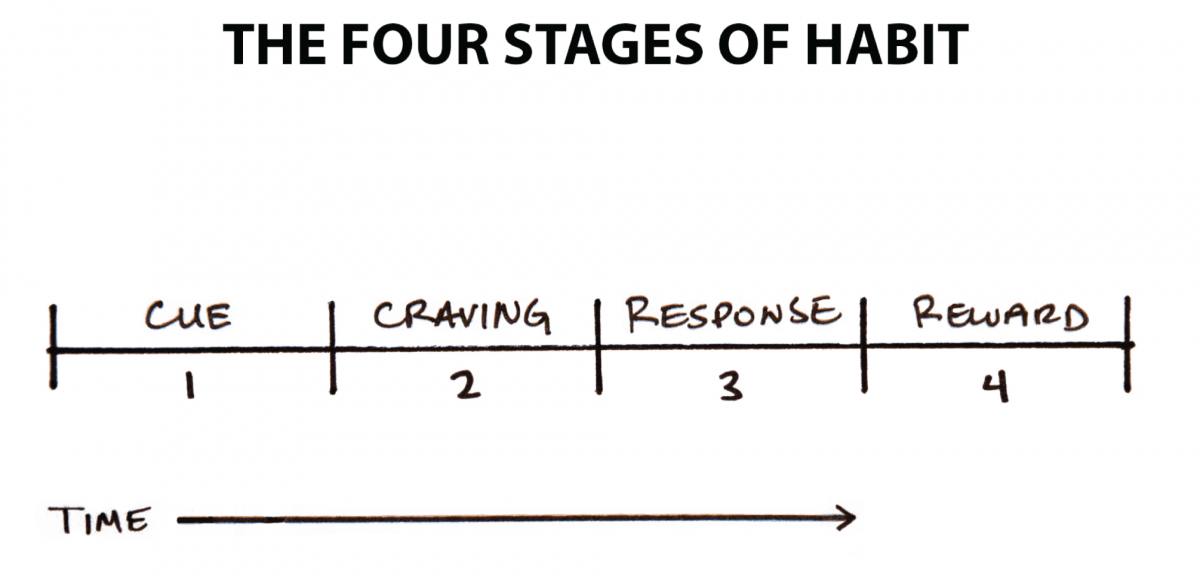
If you want to get the full library of guides/worksheets upgrade to the paid version! Upgrade Membership What is the habit you most want to break right now? Hey all, Let me tell you about one of the most common things I see when people are trying to break a bad habit. Most of the time, it is not really about the habit itself. The guy who cannot stop drinking at night may not actually be addicted to bourbon, but rather the stress reliever that comes after a long day. The bourbon is just what...