This newsletter is designed to give you researched backed skills to improve your mental, emotional and relational lives.
What daily habits actually make a difference for your brain?
|
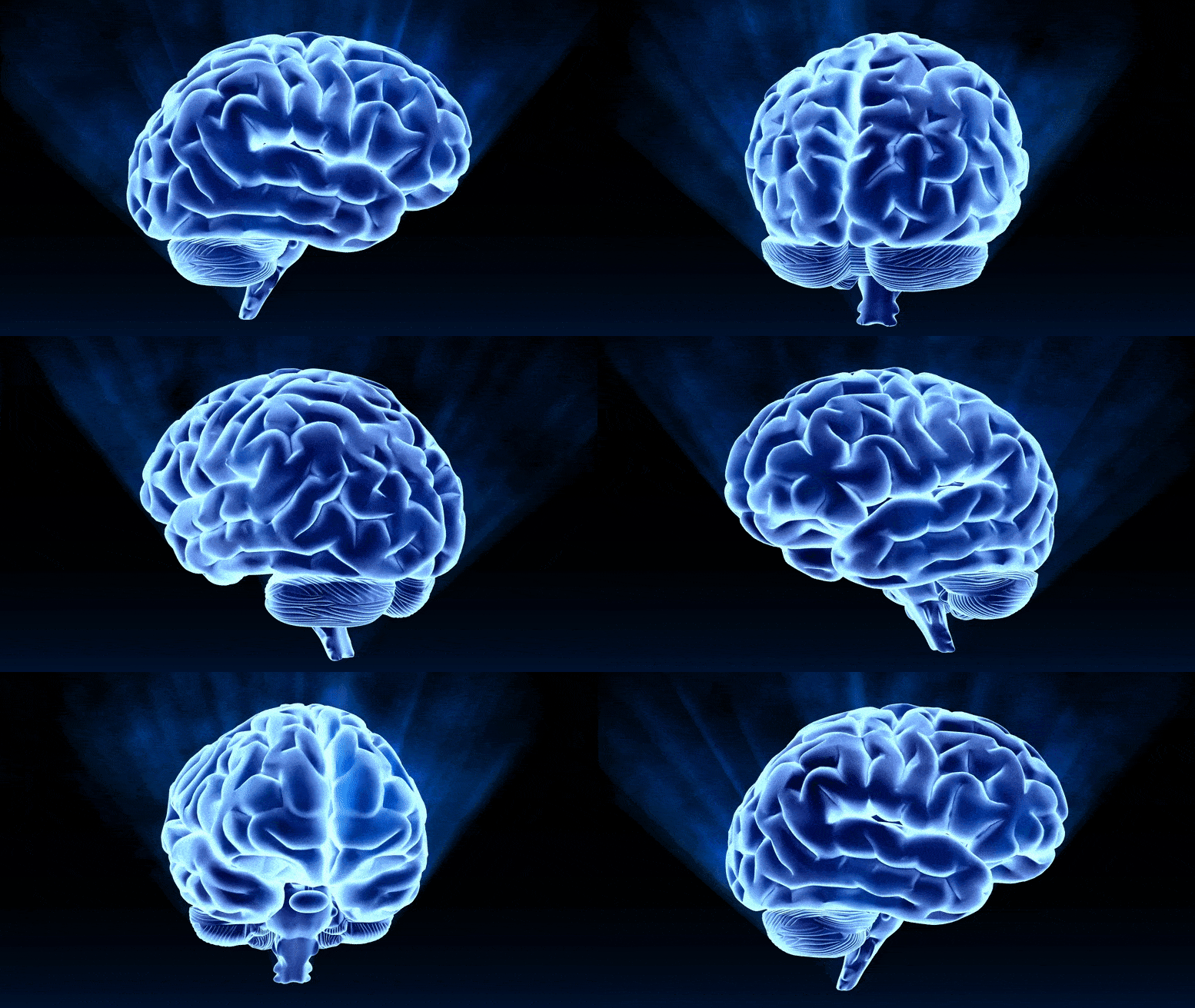
"That's your best friend and worst enemy - your own brain" - Fred Durst Hey all! A few weeks ago I was scrolling through a article written by a neuroscientist (a real one, PhD and everything) listing her daily non-negotiables for brain health. Drink water. Get sunshine. Smile more. Go to bed. I kept reading waiting for the research. It never came. I was confused... we are living in a golden era of neuroscience. The last three years alone have produced some genuinely remarkable discoveries about how the brain responds to what we do every single day. For once we finally have peer-reviewed, published findings that can shape the way we live to positively impact our brain. So here is my attempt to aggregate some of the most CURRENT and COMPELLING literature I could find all attempted to answer the question: What daily habits actually make a difference for your brain?
Habit 1: Move Your Body, bc it can protect against neurocognitive declineWhen you exercise, your brain produces a protein called BDNF (brain-derived neurotrophic factor). This is like fertilizer for your brain. It grows new neurons, strengthens the connections between existing ones (and measurably improves emotional regulation). A 2025 study found that aerobic exercise elevates the BDNF levels in your brain. In other words, your brain is literally building new "hardware" when you run, ride, or lift. The earlier you build this habit, the more neurological reserve you accumulate going into middle and later life. However if you wait: a sedentary lifestyle is associated with accelerated hippocampal shrinkage, the same region that deteriorates first in Alzheimer's disease. The brain you do not use begins to shrink. Your walk counts just as much as the gym. Just move. Habit 2: Treat your sleep like a workout. Never go two days on poor sleep.Your brain has its own built-in cleaning system called the glymphatic system. This system kind of works like a dishwasher that only runs when your asleep. While you are sleeping, cerebrospinal fluid flushes through your brain and clears out waste including amyloid-beta, a primary driver of Alzheimer's disease. If you start now: prioritizing deep, consistent sleep in your 30s and 40s is one of the most powerful things you can do to reduce Alzheimer's risk later. Every night of quality sleep is your brain running the dishwasher. The cleaner it stays, the longer it works well. Protect this. Habit 3: Eat for Your Brain, Not Just Your BodyMost men think about food in terms of weight and energy. The research is now telling us to think about it in terms of neurodegeneration. The diet is not complicated. More fish, vegetables, fruits, nuts, legumes, and whole grains. Less processed meat and saturated fat. If you don't: a diet high in processed meat and saturated fat is independently associated with accelerated cognitive decline and increased dementia risk, separate from weight or cardiovascular health. The brain pays a specific and documented price. A second 2025 study from the University of Hawaii found the protective effect holds even when people adopt these habits later in life. It is not too late to start. Habit 4: Stay Connected; The Stakes Are Higher Than You ThinkThis is the habit most people underestimate. And the research on it is the most surprising finding I came across. Social isolation is a bigger dementia risk factor than being sedentary or diabetic. Think of your close relationships like load-bearing walls in a house. You do not notice them when they are there. But remove enough of them and the structure becomes unstable in ways that are expensive and sometimes impossible to fix. If you start now: investing in real relationships, the kind that require showing up and not just texting, builds neurological resilience that compounds over time. Men with strong social connections in midlife show measurably better cognitive function in later life. A 2024 study tracking over 44,000 people found significant negative associations between both isolation and loneliness and memory performance over time. This is not soft psychology. This is structural brain health. Habit 5: Manage Your Stress Like Your Prefrontal Cortex Depends On ItBecause it does. Your prefrontal cortex handles decision-making, emotional regulation, working memory, and executive function. Think of it as the CEO of your brain, the part that keeps everything organized and running well. A 2024 review in Biological Psychiatry found that chronic stress and elevated cortisol directly target and impair the dorsolateral prefrontal cortex, degrading its architecture over time. Sustained stress does not just make you feel foggy. It is literally corroding the CEO's office. If you start now: the same research found that deliberate top-down regulation practices including structured problem-solving, ACT-based defusion, and consistent daily review can restore prefrontal function and protect against stress-related cognitive decline. Five minutes of intentional stress regulation every day accumulates into significant neurological protection over years. If you don't: chronic unmanaged stress in midlife is independently associated with earlier cognitive decline, reduced working memory, and higher rates of anxiety and depression in later life. The cortisol does not stop accumulating just because you are used to the feeling. Here's What to Actually Do With This Step 1: Move Three or More Times Per WeekAerobic exercise, 20 minutes minimum. Consistency beats intensity every time for BDNF production. Pick something you will actually do. Do it three times this week. Bonus: Make it fun. Step 2: Protect Your Deep SleepConsistent bedtime. No screens close to bed. Address anything that fragments your sleep including alcohol, late caffeine, and unaddressed sleep apnea. The glymphatic system can only run the dishwasher during deep NREM. Give it the conditions to do its job. Step 3: Eat More for your brainMore fish, leafy greens, nuts, legumes, whole grains. Less processed meat and saturated fat. Do not make it complicated. Your brain at 70 is being built right now. Step 4: Schedule Real Connection This WeekIn-person interaction is a different neurological event. Put something on the calendar this week, a meal, a phone call, a workout with a friend. Your brain needs it more than you realize and the research is no longer ambiguous about that. Step 5: Build a Five-Minute Stress Reduction PracticeA structured brain dump. A walk without a podcast. Prayer. Breath work. A consistent morning or evening ritual that engages your prefrontal cortex deliberately rather than reactively. Five minutes every day. That is the whole ask. Last Thing....Caring for your brain is not just a productivity strategy or a longevity optimization. It is stewardship. The mind you were given, the capacity to think clearly, love well, show up for your family, and do hard things with integrity, is worth protecting deliberately. Start today. Not when things slow down. Not after the next busy season. Stay connected, Zach Clinical Therapist and Founder of Mental Health 4 Men |
Mental Health 4 Men
This newsletter is designed to give you researched backed skills to improve your mental, emotional and relational lives.

Hey all, I want to tell you about something that happened right here in Kansas this past Fourth of July that has really impacted me. But first I want to set the scene... Imagine you are 19 years old and you sign up to serve your country. You do the training. Then you deploy. And for the next eight, twelve, maybe sixteen months, your entire nervous system gets rewired around one singular biological imperative: survive. Loud noises start to become potential threats. Unfamiliar vehicle on the...
"Attachment is a unifying principle that reaches from the biological depths of our being to its furthest spiritual reaches." — Jeremy Holmes, Hey All! There’s an Harvard experiment from the early 1970s that has really shaped the way I approach each client I work with in session called “The Still Face Experiment”. A mom sits with her baby. They’re playing. Smiling. Locking eyes back and forth in that normal rhythm of connection. Then, on cue, the mom’s face goes still. Blank she stops...

Over 900 new subscribers joined this past month! Welcome! If you want to go deeper, we launched a paid tier where a portion of every subscription goes directly to domestic violence shelters. Glad you are here either way. Upgrade to Paid Tier Hey all, A guy texted me this week, two days into his family vacation, and said something that stuck with me. "I don't know what's wrong. I'm sitting on a beach with my kids and I feel nothing. I should be relaxed. I'm just numb." That sentence captures...