This newsletter is designed to give you researched backed skills to improve your mental, emotional and relational lives.
Do you have low EQ?
|
If you want to get the full library of guides/worksheets upgrade to the paid version!
“A fool gives full vent … but a wise man holds it back.” — Proverbs 29:11 Most of us grew up hearing about IQ…It showed up in school testing and conversations about who was smart and who was not. The idea was simple: intelligence is measurable, it predicts success, and the higher your number the better off you are. The term IQ (Intelligence Quotient) was coined by German psychologist William Stern in 1912 and was used to measure cognitive ability. For most of the twentieth century, it was treated as the gold standard for predicting how well someone would do in life. Then in 1990, two psychologists named Peter Salovey and John Mayer published a paper introducing a different concept entirely. They called it EQ (Emotional Intelligence). The ability to recognize, understand, manage, and use emotions effectively in yourself and in your relationships. EQ researchers made the case that IQ alone is a poor predictor of how well someone’s life actually goes. That the skills most responsible for success in careers, marriages, parenting, and leadership had almost nothing to do with how smart you are and almost everything to do with how well you understood and managed what was happening inside you.
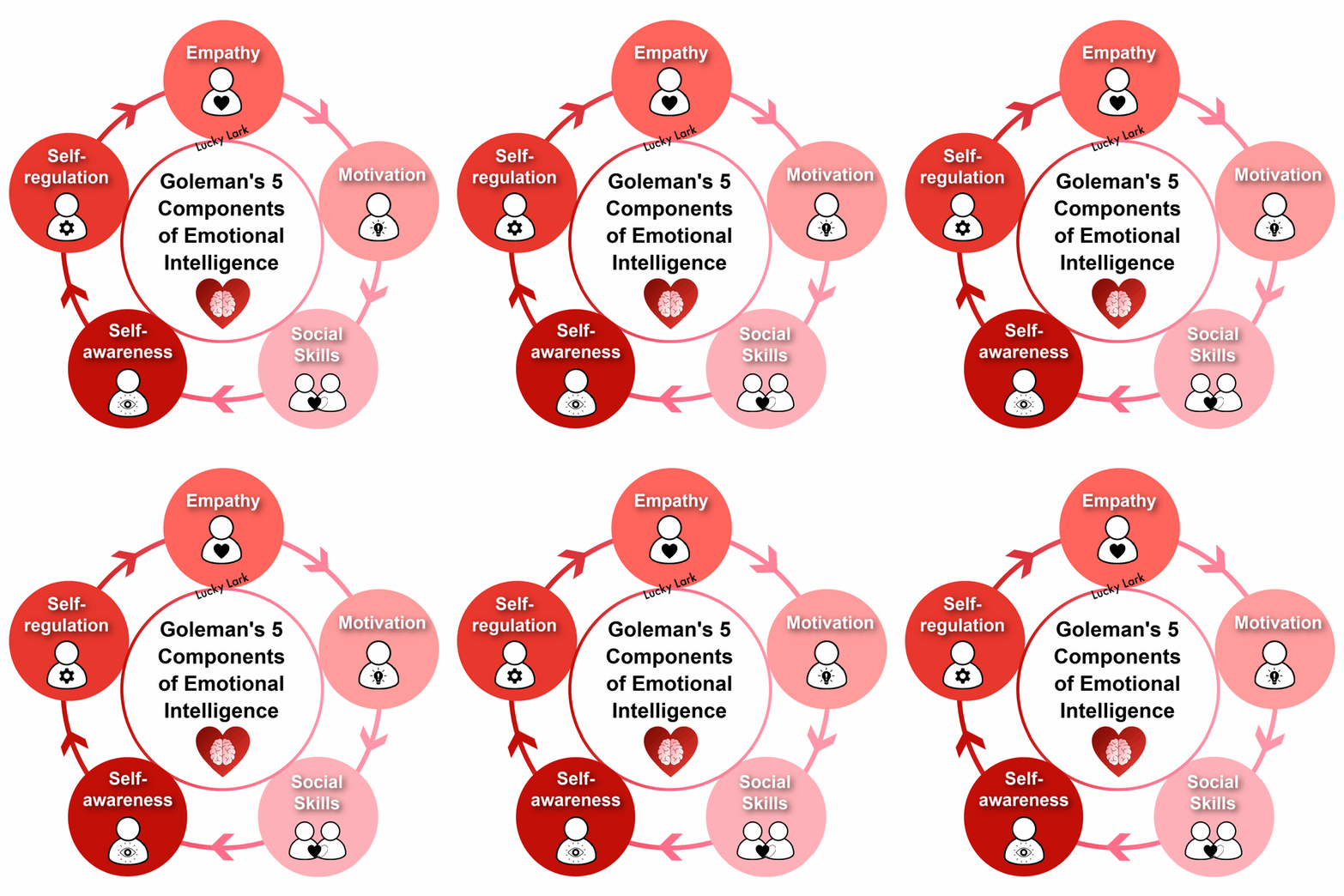
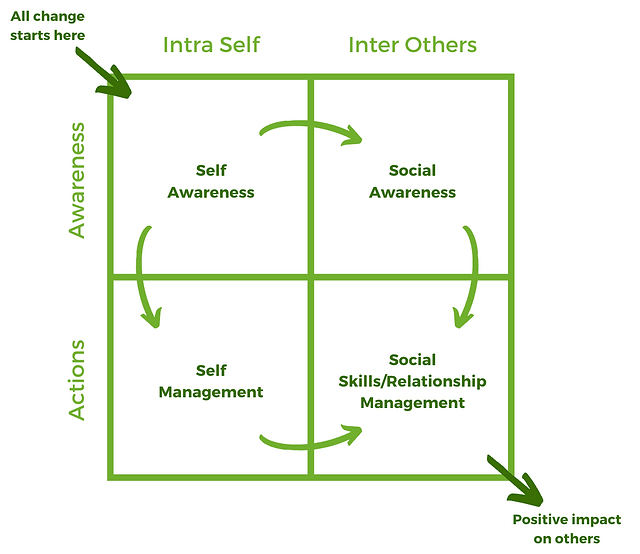
Early in my career I worked with a guy who was, by every measurable standard, exceptional. He was off the charts IQ. He had built a successful businesses from nothing, made good money. His hobby was trivia night and he told me he was undefeated. He came to see me because his second marriage was falling apart. We spent the next several months figuring out why. He could analyze a balance sheet but could not tell you what he was feeling in a hard conversation. He could negotiate a contract with a stranger but not navigate conflict with a friend. He could read a market but could not read the people closest to him. He had spent his entire life developing his intellect and almost no time developing his ability to understand, manage, and communicate what was happening inside him. This is pretty common in high-performing men. The same drive and discipline that produces success in measurable areas of life often comes at the expense of the internal work. What Emotional Intelligence Actually IsGoleman identified emotional intelligence as a set of skills organized around five domains: self-awareness, self-regulation, motivation, empathy, and social skills. His research found that these skills, not raw intelligence, were the strongest predictors of long-term success in careers, relationships, and overall wellbeing. Think of IQ like the engine of a car. It determines raw horsepower. But emotional intelligence is the steering wheel. Without it, all that power just takes you somewhere you did not intend to go, fast. Introduction 101 to EQ: The Five DomainsSelf-awareness
Self-regulation
Motivation
Empathy
Social skills
“The sign of an intelligent people is their ability to control their emotions by the application of reason.” — Marya Mannes Most men were never taught emotional intelligence as a skill.
We were taught performance. Output. Achievement. The internal landscape was largely left unaddressed and in a lot of cases actively discouraged.
That suppression redirects diffictult emotions to irritability/anger/depression for a lot of people. The good news is that unlike IQ, which is largely fixed, Goleman’s research is explicit that emotional intelligence is a learned set of skills that can be developed at any point in life with intentional practice. You are not stuck with the emotional skill level you arrived at adulthood with. A Couple Ways to Start Growing your EQ….
Quiz for Measuring Your EQ:Rate yourself honestly on a scale of 1 to 5 for each question. 1 means this is rarely true. 5 means this is consistently true. Self-Awareness
Self-Regulation
Motivation
Empathy
Social Skills
What Your Score Means Add up your total out of 50.
Keep growing, keep learning, and keep asking questions. Stay Connected. Zach Clinical Therapist and Founder of Mental Health 4 Men If you want to get the full library of guides/worksheets upgrade to the paid version!
|
Mental Health 4 Men
This newsletter is designed to give you researched backed skills to improve your mental, emotional and relational lives.
If you want to get the full library of guides/worksheets upgrade to the paid version! Upgrade Membership The 5 Most Common Regrets Dads Have With Their Kids Hey all, Over the years I have had a lot of dads sit in my office and talk about their kids. My job has allowed me a window in every type of family structure I can imagine. Some Dads come in when their kids are young, trying to figure out how to be more present, how to manage the stress they are bringing home, how to show up better for...
If you want to get the full library of guides/worksheets upgrade to the paid version! Upgrade Membership At Least It Wasn't Number Two We are potty training at the Werhan house... For those of you who have been through this, you already know what that means. For those of you who have not, let me paint you a picture... I was walking past the bathroom back into my room when I noticed water gushing out of the hallway bathroom. Initially, every bad thought/word went through my mind as I opened...
If you want to get the full library of guides/worksheets upgrade to the paid version! Upgrade Membership What is the habit you most want to break right now? Hey all, Let me tell you about one of the most common things I see when people are trying to break a bad habit. Most of the time, it is not really about the habit itself. The guy who cannot stop drinking at night may not actually be addicted to bourbon, but rather the stress reliever that comes after a long day. The bourbon is just what...